
Developing Provision and Practice for EAL Learners
2 dates
£185.00
+ VATLive Online
1 date
£185.00
+ VAT



What if improving attendance starts with changing the school experience, rather than simply asking children to return?
When a child struggles to attend school, getting them back through the gates is often the immediate priority. But what happens when the barriers that made school difficult in the first place remain unchanged?
Attendance matters. But being in school is not the same as feeling safe, included or able to learn.
The EBSA Conference 2027 challenges schools to look beyond absence and explore what needs to change within school environments, relationships and everyday practice to help children and young people experiencing Emotionally Based School Avoidance (EBSA) attend, engage and thrive.
Bringing together leading education specialists, this practical, thought-provoking conference will equip school leaders, SENCOs/ALNCos, attendance teams, pastoral professionals and teachers with strategies to identify barriers, make meaningful adjustments, strengthen relationships and develop coordinated approaches to supporting pupils.
Throughout the day, delegates will explore the impact of sensory demands, neurodivergence, masking, unmet SEND/ALN needs and school environments on attendance and engagement. They will consider how to understand children’s experiences, listen to their voices and develop individualised pathways that prioritise emotional safety, participation and sustainable progress.
The conference will also tackle the difficult conversations that can arise when relationships between schools and families become strained, offering practical approaches to rebuilding trust, reducing conflict and developing realistic, collaborative plans.
Crucially, EBSA cannot be addressed by attendance teams alone. Effective support requires shared responsibility, consistent practice and coordinated action across the whole school.
Delegates will leave with practical strategies and an EBSA Toolkit to help review existing provision, identify priorities and strengthen their school’s response to EBSA.
Because improving attendance isn’t simply about getting children back into school. It’s about creating the conditions that help them stay, participate, learn and belong.
Move beyond attendance figures: Understand how children's lived experiences, unmet needs and barriers within school environments affect attendance, engagement and learning, and identify practical steps schools can take to address them.
Make school more accessible for neurodivergent learners: Identify and implement practical adjustments to sensory environments, communication, movement, working memory and executive functioning that reduce barriers and improve participation.
Listen differently to the child's voice: Develop practical, inclusive and trauma-informed approaches to understanding children's experiences, recognising unmet needs and ensuring their voices inform decisions, even when they struggle to communicate how they feel.
Strengthen belonging and psychological safety: Apply practical strategies to develop positive relationships, supportive environments and a whole-school culture where children feel safe, understood, included and able to engage in learning.
Co-produce individualised pathways back to learning: Develop realistic, flexible and graduated support plans with children, families and relevant professionals that prioritise emotional safety, rebuild confidence and support sustainable attendance and engagement.
Rebuild trust between school and home: Develop confidence in managing difficult conversations, reducing conflict and working collaboratively with families to identify barriers, agree realistic expectations and create shared plans that support lasting progress.
Move from isolated interventions to shared responsibility: Strengthen whole-school coordination between senior leaders, attendance teams, SENCOs/ALNCos, pastoral staff, teachers and external professionals to ensure consistent, joined-up support and clear accountability.
Turn early identification into effective action: Recognise emerging signs of EBSA and translate concerns into timely adjustments, targeted interventions and coordinated support plans that prevent difficulties escalating into persistent or severe absence.
Translate learning into whole-school practice: Take away practical strategies and an EBSA Toolkit to evaluate current provision, identify improvement priorities, develop a coordinated whole-school action plan and review the impact of approaches on inclusion, engagement and attendance.
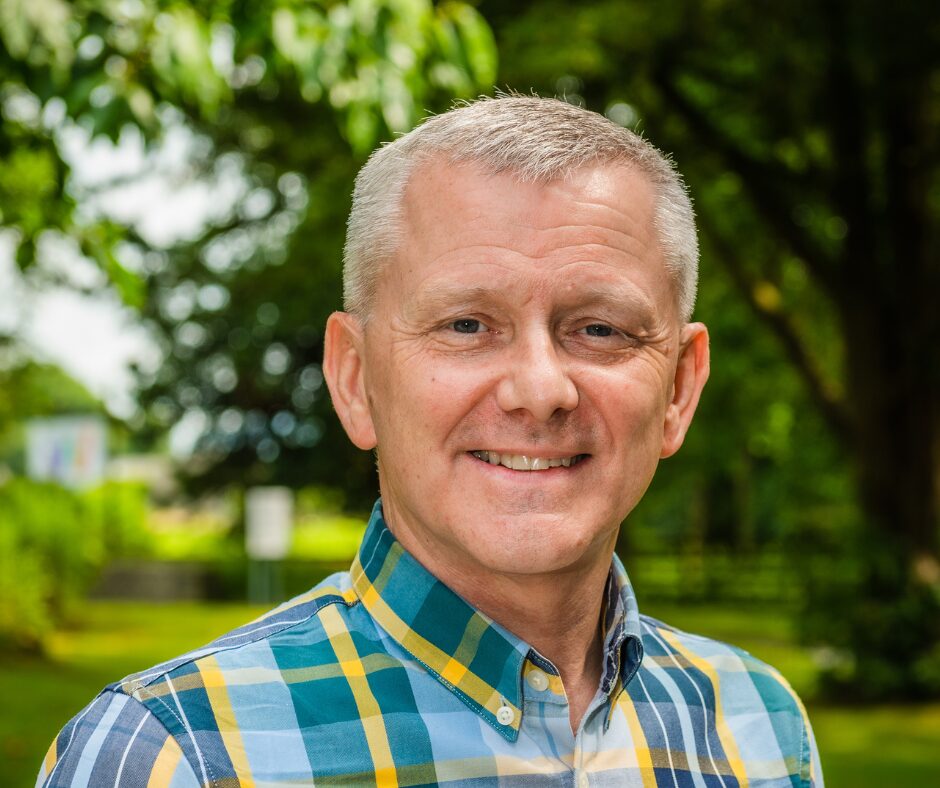
Colin Foley is an internationally renowned speaker and training consultant, specialising in education and neurodiversity for employers, in private sector business, public services, health... and social care services since 2015. Colin 25 years experience in the education sector, in senior leadership, teacher training and as Director of College, have gained him a reputation as a major influence and pioneer in the emerging paradigm of neurodiversity in education. Working extensively in international and independent schools and academies across the UK, Colin provides dynamic bespoke training, evidence- based strategies and demonstrations of best practice. Colin is a regular speaker at the TES Education Show, the Welsh Education Show and conferences for all sectors of industry and public services. Colin has collaborated with a wide range of industries in the UK and internationally, including Astra Zeneca, Barclays Bank, Marks & Spencer, McQuarrie Bank, Ministry of Defence, NHS, London Metropolitan Police, Crown Estates, Mubadala Hedge Fund, UK Border Force, The British Horse Society, The Football Association and Premiership Teams such as Liverpool and Chelsea FC, Bakkavor Foods International, Crown Estates and the Ministry of Defence. Colin has also developed training for numerous Third Sector organisations including the Royal Voluntary Service, ADHD Foundation, St James Place, The Children’s Society and Action for Children.

Emma is an experienced education consultant, specialist teacher and autism specialist with over 20 years' experience in education. Through her work with schools, education professional...s and families, Emma supports the development of inclusive educational practice, with a particular focus on understanding the individual needs of learners and removing barriers to successful engagement and achievement. Her approach combines specialist knowledge with practical, real-world experience, encouraging educators to look beyond labels and behaviours to understand the factors influencing how children think, learn and experience education. Emma is passionate about ensuring that inclusion is not simply about access or participation, but about creating meaningful opportunities for every learner to be challenged, develop and achieve their potential.

Kelly puts wellbeing at the heart of education. She is an award-winning motivational
speaker and school improvement advisor, published author and founder of ‘Family
Matters’ empower...ment programme.
Kelly has worked systemically with some of the most challenging communities,
helping families thrive in difficult circumstances. She advises in the development of
staff wellbeing to improve teacher retention and embeds purposeful strategies to
support School Leader’s emotional health. Kelly is an advocate for Senior Mental
Health Leads and helps drive school development processes forward, whilst creating
outstanding outcomes and awards for many organisations. She is a trailblazer within
the Wellbeing Lead Network for supporting pastoral teams. Her work is recognised
by the DfE, NCB, The Anna Freud Centre and The Education Support Partnership as
a lead influencer of mental health and wellbeing in education.
Kelly is currently leading on the DFE Wellbeing for Education Return Programme
within Kent County Council.

Nicola Harvey
Nicola Harvey is a former SEND teacher with a passion for promoting wellbeing and inclusion in education. She is the founder of Harvey Heals Wellbeing & Training Consultancy which strives... to raise awareness of compassionate mental health through a diverse and inclusive lens. Nicola is a qualified and experienced mental health specialist, education consultant, clinical reflective practice supervisor, and MHFA England trainer. With a compassion-focused approach, Nicola strives to embed evidence-based nurturing approaches to supporting mental health and wellbeing.

Having spent over 25 years teaching and leading a variety of schools across the UK, Steve is a sought after as an expert practitioner, consultant, and trainer. He specialises in developin...g effective school leadership at all levels; and supporting outstanding and impactful classroom practice, pedagogy, learning and teaching.
Steve is lead quality assurance inspector for The British Council in Egypt, where he also leads successful training programmes for school leaders and teachers. These programmes have now been taken up by The British Council in Nepal and Saudi Arabia where programmes having been piloted with teachers and school leaders and are now due for implementation academic year 2021-2022.
Steve has led teaching and learning development projects in China, Kazakhstan, and Kurdish Iraq.
In China, he worked in partnership with the Ministry of Education to train Chinese teachers in modern classroom pedagogy and practice as part of the Chinese Government’s 2020 Education reforms.
In Kazakhstan, Steve worked with partners from Cambridge University Press to train local teachers to plan, write and implement a series of primary textbooks as a tool for remote education reform.
In Kurdish Iraq, Steve worked in partnership with a large chain of international schools to train teachers and school leaders in modern pedagogy and leadership, quality assurance and inspection. This was part of a larger project to lead education reform across Kurdish Iraq which has had to be put on hold due to the pandemic.
Currently, Steve is co-ordinating leadership development and curriculum development projects for government schools in India, Bangladesh, and Saudi Arabia. This includes working with a Mumbai based University to plan, write and lead a post graduate diploma in Global Education, alongside leading leadership, and teacher training for many schools across India.
Alongside Steve’s training and education reform projects, he receives frequent invitations to speak at international education conferences, features in a wide range of training videos and online seminars, hosts regular interactive webinar sessions on key aspects of effective classroom practice and school leadership; and coaches and mentors headteachers worldwide.
Steve is a lead trainer for The British Council, and lead trainer and examiner for Cambridge Assessment International Examinations and the International Baccalaureate
Steve writes, delivers and hosts training and consultancy in schools, colleges, academies and conference venues throughout the UK, Europe, The Indian Subcontinent, Central and southern Asia and the Middle East as well as supporting organisations in planning, producing and delivering on-line and blended learning education courses.
Steve writes a regular column for several UK education publications and is currently writing a teacher development training manual for an international publisher.
In addition to his work in education reform and development, Steve is a professional musician, choral conductor and arranger who leads choral workshops for amateur and professional singers.
Don’t just take our word for it, visit our social media pages for live feedback.


Stay at home, get comfortable and enjoy our live interactive conference via Zoom! You’ll receive the link a few days before the conference date so you can get prepared (and excited) ahead of time.
View 1 date & book
Friday 12 March 2027